

Understanding the Bridge Between Legacy and Modern Optics
Auto focus adapters represent one of the most transformative innovations in modern imaging—optical and mechanical bridges enabling photographers and videographers to deploy legacy lenses on contemporary camera systems while maintaining (or gaining) autofocus capability. For decades, adapting older lenses to newer camera bodies meant sacrificing autofocus performance, forcing creators to choose between optical character and operational convenience. Auto focus adapters eliminated this compromise by integrating electrical communication, precision motor mechanisms, and intelligent optical design.
At Leedsen Lens (leedsenlens.com), we understand that modern cinematography and photography demand optical flexibility. With 15+ years manufacturing precision optical systems, lens adapters, and custom mechanical solutions, we recognize that auto focus adapters have become essential infrastructure for professional creators. The global lens adapter market continues expanding as photographers and videographers increasingly recognize the optical character and investment value of legacy glass—combined with the operational convenience of modern autofocus systems.
This comprehensive guide explores everything photographers and videographers need to understand about auto focus adapters: how they function, what types exist, compatibility considerations, performance characteristics, and strategic deployment across professional workflows. Whether you’re a still photographer seeking to maximize lens investments across camera platforms, a videographer leveraging manual cinema lenses with wireless focus systems, or a filmmaker exploring vintage optics on contemporary digital cameras, understanding autofocus adapter technology enables smarter equipment decisions.
Defining Auto Focus Adapters: Mechanical and Electronic Integration
Auto focus adapters are precision-engineered mounting devices that physically connect lenses from one camera system to bodies from another system while simultaneously enabling electronic communication enabling autofocus operation. At their core, autofocus adapters bridge two critical incompatibilities: mechanical (differing lens mount geometries) and electrical (divergent communication protocols between camera systems).
Basic Architecture: All autofocus adapters feature four essential components: (1) a lens mount matching the legacy lens being adapted, (2) a camera mount matching the target camera body, (3) electrical contact pins transmitting focus commands between camera and lens, and (4) mechanical precision ensuring optical infinity is maintained (critical for proper focus operation).
Why Standard Adapters Fail: Simple passive adapters—purely mechanical connections without electrical communication—cannot transmit autofocus signals. When mounting a Canon EF lens on a Sony E-mount mirrorless camera through a basic mechanical adapter, the camera cannot communicate focus commands to the lens motor, forcing manual focus operation. Autofocus adapters solve this by transmitting electrical signals from the camera’s autofocus system directly to the lens’s focus motor, restoring full autofocus functionality despite the mechanical incompatibility.
Three Categories of Auto Focus Adapters: Understanding Your Options
Professional autofocus adapters fall into three distinct categories, each serving different use cases and offering varying levels of functionality.
Type 1: Native OEM Autofocus Adapters
Canon EF to RF Mount Adapter: Canon’s official solution enabling EF/EF-S lenses on RF-mount mirrorless bodies. The adapter incorporates precision electrical contacts maintaining complete autofocus, aperture control, image stabilization, and EXIF data transmission. The native design ensures performance matching original specifications—critically important for professional workflows requiring predictable, reliable autofocus behavior.
Nikon F to Z Mount FTZ/FTZ II Adapter: Nikon’s professional-grade solution maintaining compatibility with the vast F-mount lens ecosystem while enabling autofocus on Z-series mirrorless cameras. The FTZ II generation features improved autofocus speed and reliability compared to the original FTZ. Full compatibility exists for AF-S and AF-I lenses with built-in motors; older screw-drive AF lenses achieve manual focus only through the FTZ adapter.
Sony LA-EA5 (A-Mount to E-Mount Adapter): Sony’s professional adapter connecting A-mount legacy lenses to E-mount mirrorless bodies. The LA-EA5 incorporates an internal autofocus motor enabling autofocus on A-mount manual lenses while maintaining full camera communication with E-mount native lenses.
Leica R to M Mount Adapter: Enables Leica R-mount classic optics on M-mount digital rangefinders, though with manual focus only (R-mount manual lenses lack electronic autofocus motors).
Advantages of Type 1 OEM Adapters:
Manufacturer precision engineering ensuring optimal performance
Complete electrical communication protocols
Warranty coverage and official support
Predictable autofocus speed and accuracy
Disadvantages:
Limited to manufacturer’s lens-camera combinations
Premium pricing ($200-400+ typically)
Restricted to specific optical ecosystems
Type 2: Third-Party Smart Autofocus Adapters
Third-party manufacturers including Viltrox, Commlite, Fotodiox, and others produce cross-platform autofocus adapters enabling diverse lens-camera combinations.Viltrox Autofocus Adapters: Viltrox produces extensive autofocus adapter lines connecting major mount combinations: Canon EF to Sony E, Nikon F to Sony E, Sigma SA to Sony E, and specialized cinema solutions (PL to E-mount with full autofocus). The adapters feature electronic communication maintaining autofocus, aperture control, and image stabilization.
Commlite Smart Adapters: Commlite specializes in cross-brand compatibility, offering Canon EF to Nikon Z, Canon EF to Sony E, and other combinations with full autofocus support. The adapters incorporate intelligent electrical communication protocols automatically configuring based on connected lens and camera.
Fotodiox PRO PRONTO Adapters: Fotodiox produces universal adapters supporting manual focus lenses gaining autofocus capability through intelligent motor positioning (Type 3 category).[web:124][web:130][web:148] Specialized versions include Leica M to Sony E, various vintage mount adaptations, and cinema applications.
Advantages of Type 2 Third-Party Adapters:
Cross-platform compatibility (Canon to Sony, Nikon to Sony, etc.)
Wider lens-camera combination support
Often lower pricing ($150-400 range) compared to OEM alternatives
Flexibility for mixed-brand workflows
Disadvantages:
Performance variability across lens models
Occasional autofocus hunting or slower speed than native systems
Limited warranty and manufacturer support
Compatibility challenges with certain lens/camera combinations
Type 3: Motor-Powered Manual-to-AF Conversion Adapters
The “Holy Grail” Innovation: A revolutionary category emerged enabling manual focus lenses gaining functional autofocus through integrated motor mechanisms. These adapters physically move entire lens elements back-and-forth, achieving focus without internal lens motors.
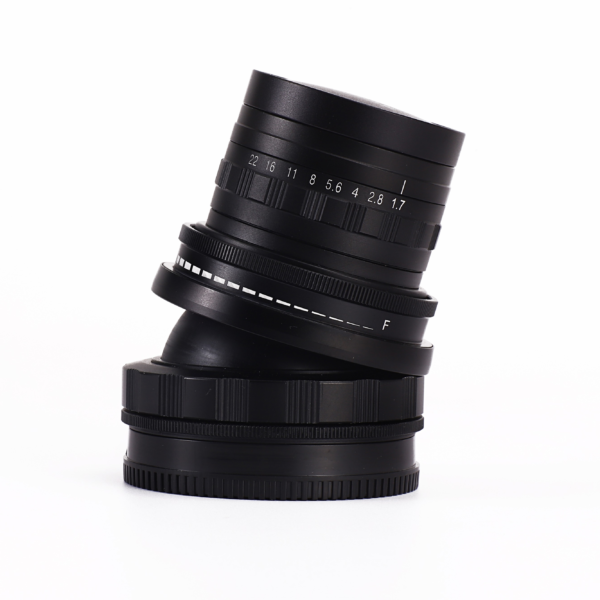
TECHART LM-EA Series Adapters: TECHART pioneered this technology with adapters enabling vintage manual focus lenses (including rangefinder glass from the 1950s-1970s) achieving autofocus functionality on Sony E-mount cameras through precise mechanical motion. The adapter’s motor physically displaces the entire lens barrel achieving focus, rather than moving internal optical elements.
Tilta Nucleus AF Adapter: Tilta’s revolutionary 2025 solution integrates phase-detection autofocus from the camera body directly into the adapter, sending AF data to Nucleus-M II wireless focus motors. The system leverages the camera’s native autofocus engine, enabling advanced features including face/eye tracking and tap-to-focus on manual cinema lenses.
Fotodiox PRONTO Mark II: Fotodiox’s universal manual-to-AF adapter enables vintage lenses (including a documented 1897 Bausch & Lomb large-format lens) gaining autofocus on modern cameras.
Advantages of Type 3 Adapters:
Enables autofocus on lenses originally designed for manual focus only
Resurrects valuable optical investments
Particularly valuable for vintage and cinema lens applications
Innovative motor-based focusing mechanisms
Disadvantages:
Higher complexity and cost ($400-800+ typically)
Potential focus speed limitations with heavy lenses
Physical bulk from integrated motor mechanisms
Lens weight affecting autofocus performance
Compatibility Considerations: Ensuring Successful Adaptation
Successful autofocus adapter deployment requires understanding compatibility variables that determine whether adapted systems will function reliably.
Lens Motor Requirements: Not all lenses include autofocus motors. Modern AF lenses feature internal motors enabling independent focus movement. Older lenses with screw-drive autofocus (pre-1990s designs) rely on external motors in camera bodies—unavailable on mirrorless systems. Autofocus adapters require AF-S (internal motor) equipped lenses for Type 1/Type 2 adapters. Type 3 motor-powered adapters work with manual lenses, including screw-drive AF lenses, since the adapter provides external focusing mechanism.
Electronic Communication Protocol: Camera manufacturers encode lens communication differently. Canon EF lenses transmit autofocus information using Canon protocols; Sony A-mount lenses use Sony protocols. Third-party adapters must accurately translate these signals, leading to performance variations across different lens models and manufacturing generations.
Optical Performance Impact: Quality autofocus adapters maintain precise mechanical tolerances ensuring optical infinity (critical for proper focus) remains unchanged when adapting lenses. Poor-quality adapters may introduce focus accuracy errors or soft image rendition.
Camera Firmware Compatibility: Modern cameras occasionally release firmware updates affecting autofocus behavior and lens compatibility. Using current firmware ensures optimal adapter performance, particularly with third-party solutions where compatibility improvements frequently appear in firmware iterations.
Professional Applications: Where Autofocus Adapters Excel
Still Photography Cross-Mount Workflows: Photographers invested in Canon’s EF lens ecosystem can deploy those optics on Sony E-mount mirrorless bodies through high-quality autofocus adapters, eliminating forced lens reinvestment. This strategic flexibility proves particularly valuable during camera system transitions when maintaining existing lens investments offers significant financial advantage.
Videography and Hybrid Workflows: Video creators increasingly adopt mirrorless cameras as primary tools while maintaining cinema lens ecosystems. Autofocus adapters (particularly Type 3 Tilta Nucleus solutions) enable manual cinema primes gaining autofocus capability through wireless focus motors—powerful for run-and-gun production scenarios.
Vintage Lens Revival: Collectors and creative professionals value optical character of vintage lenses (1960s-1980s designs) for unique rendering qualities unavailable in modern optics. Type 3 motor-powered adapters resurrect these optical investments, enabling contemporary deployment with operational convenience.
Specialty and Macro Photography: Macro photographers often seek rare specialty lenses available primarily in legacy mounts. Autofocus adapters enable modern cameras deploying these specialized optics.
Production Rental Economics: Commercial production houses maintain extensive lens inventories. Autofocus adapters enable flexible deployment across diverse camera platforms, maximizing equipment utilization without requiring complete ecosystem duplication.
Performance Characteristics: Autofocus Speed, Accuracy, and Reliability
Autofocus Speed Variation: Type 1 OEM adapters typically match native autofocus speed—critically important for professional workflows requiring predictable performance. Type 2 third-party adapters often exhibit slightly slower autofocus compared to native systems, occasionally noticeable in continuous autofocus tracking scenarios. Type 3 motor-powered adapters show variable focus speed depending on lens weight and motor capability; heavier lenses naturally focus more slowly.
Accuracy and Hunting: Autofocus hunting (lens oscillating around focus point without settling) occurs occasionally with adapted systems, particularly when using older lenses with slower AF motors on contemporary cameras with aggressive autofocus algorithms. Switching autofocus modes (AF-S single-shot focus rather than AF-C continuous) often resolves hunting issues.
Reliability Testing: Professional reviews comparing third-party adapters (Commlite, Vello, Fotodiox) adapting Nikon F lenses to Sony E-mount reveal performance variations across different lens models.[web:147] Some lenses consistently achieve reliable autofocus; others exhibit occasional focus failures requiring manual intervention. Researching specific lens-adapter combinations before purchase minimizes deployment surprises.
Comparison: Autofocus Adapters Across Type and Application
Feature | Type 1 (OEM Native) | Type 2 (Third-Party Cross) | Type 3 (Motor-Powered) |
Autofocus Motor | Lens-based internal motor | Lens-based internal motor | Adapter-integrated motor |
Focus Speed | Native speed maintained | 80-95% of native speed | Variable (lens weight dependent) |
Compatibility | Manufacturer lens + camera only | Cross-brand combinations | Works with manual lenses |
Cost Range | $250-400 | $150-400 | $400-800+ |
Electrical Communication | Full native protocol | Translated protocol | Camera AF data → motor command |
Autofocus Accuracy | Excellent (native specs) | Good to excellent | Good (camera AF-dependent) |
Manual Focus Override | Yes | Yes | Yes |
Image Stabilization | Full transmission | Usually supported | Manual lenses unchanged |
EXIF Data | Complete transfer | Partial to complete | Limited data |
Warranty/Support | Manufacturer backed | Limited third-party support | Limited support |
Typical Use Case | Canon EF→RF, Nikon F→Z | Canon EF→Sony E, Nikon F→Sony E | Vintage lenses, cinema primes |
Advanced Features | Brand-specific controls | Basic compatibility | Wireless motor integration (newer) |
FAQ: Essential Auto Focus Adapter Questions Answered
Q1: Will my autofocus lens work with a basic mechanical adapter?
No—mechanical adapters lack electrical contacts transmitting autofocus signals. The lens mounts physically but cannot autofocus. Smart autofocus adapters with electrical contacts are required.
Q2: Are Type 2 third-party adapters as good as Type 1 OEM adapters?
Often yes for autofocus performance, though occasionally slower. Reliability varies across lens models—research specific combinations before purchasing.
Q3: Can I use Type 3 motor-powered adapters with autofocus lenses?
Yes—Type 3 adapters work with both manual and autofocus lenses. They excel enabling manual lens autofocus but also support AF lenses through alternative focusing mechanisms.
Q4: Which autofocus adapter should I buy for Canon EF lenses on Sony?
Research specific lens models you’re adapting. Popular options include Viltrox AF adapters (medium performance/cost), Commlite (high performance), Fotodiox Pro (budget alternative). Test before major purchases if possible.
Q5: Do autofocus adapters maintain image quality?
Quality adapters maintain native optical performance with precise mechanical tolerances. Poor-quality adapters may introduce soft focus or accuracy errors. Purchase from reputable manufacturers.
Q6: Are wireless focus motor systems (Tilta Nucleus) compatible with all lenses?
Tilta Nucleus AF adapters work with lenses supporting phase-detection autofocus from the camera sensor. Manual lenses without AF capability require manual focus control or Type 3 external motor solutions.