

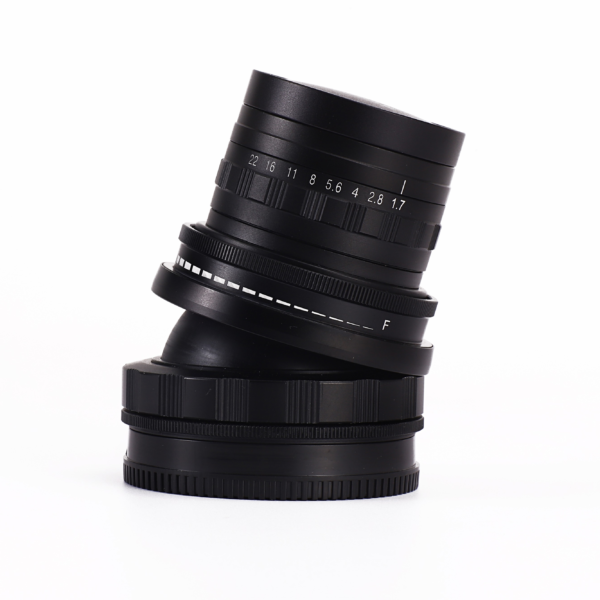
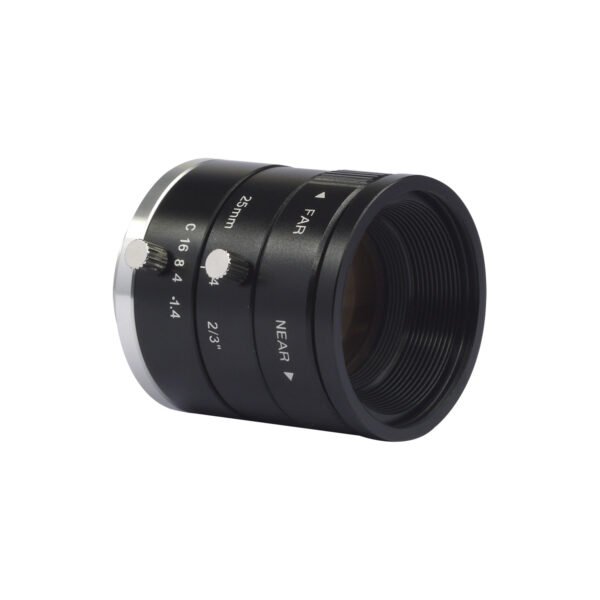
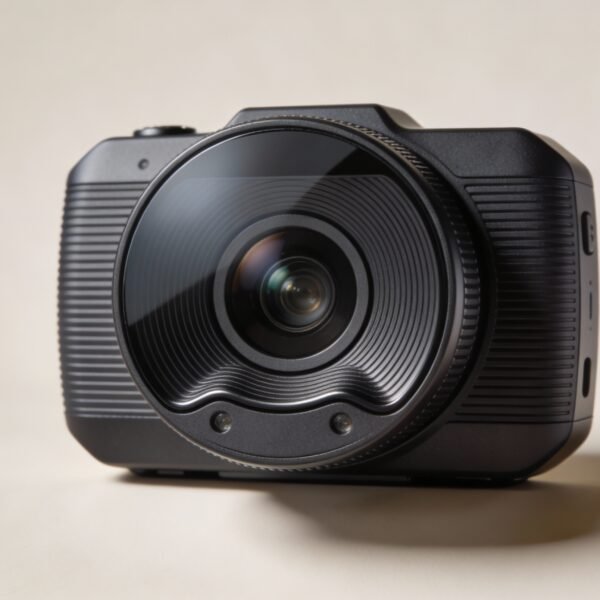
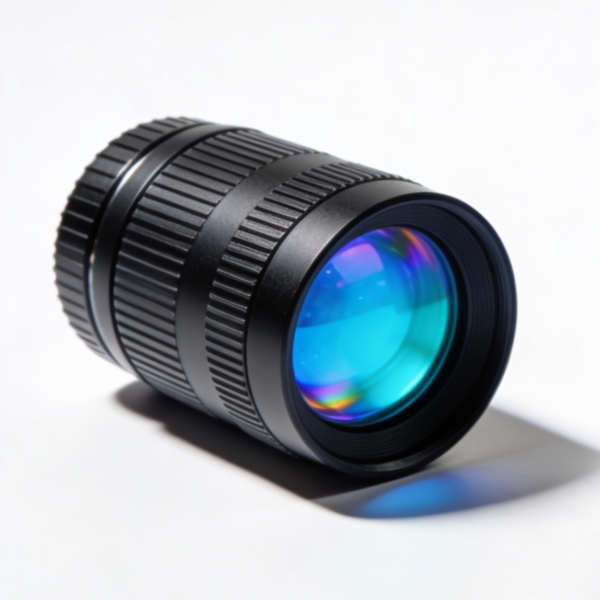
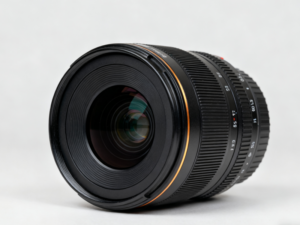
In the simplest terms, a camera body is merely a light-proof box containing a recording medium, be it a digital sensor or a strip of film. While the camera body records the image, it is the lens that actually creates it.
When asking what does a camera lens do, one is essentially asking how a device captures a three-dimensional scene and translates it onto a two-dimensional plane. The lens is not just a passive window; it is an active manipulator of physics. It gathers light rays, bends them through a series of glass elements, and focuses them into a coherent image with specific characteristics of sharpness, contrast, and depth.
To understand photography, one must understand the lens. It determines the field of view, the magnification, the amount of light entering the system, and the aesthetic quality of the background blur. This guide explores the mechanical and optical engineering behind how camera lenses function.
The Fundamental Physics: Refraction and Convergence
At its core, the function of a camera lens relies on the physics of refraction. Light travels in straight lines. However, when light passes from one medium to another of a different density (for example, from air into glass), it changes speed and bends.
If a piece of glass is curved properly, it can bend parallel light rays so that they converge at a single point. This is the basic principle of a convex lens.
What does a camera lens do with these light rays?
Gathering: It captures a cone of light from the scene.
Bending: It refracts those rays inward.
Focusing: It directs the rays to meet at a specific distance behind the lens, known as the focal plane.
When the focal plane aligns perfectly with the surface of the camera’s image sensor, the image is “in focus.” If the rays meet before or after the sensor, the image appears blurry. The complexity arises because light of different colors bends at different angles, and flat sensors require a flat field of focus, necessitating complex engineering beyond a simple magnifying glass.
Anatomy of a Lens: More Than Just Glass
A modern camera lens is a tube packed with precision engineering. It is rarely a single piece of glass. Instead, it is an optical assembly consisting of multiple elements arranged into groups.
1. Optical Elements
These are the individual glass lenses within the barrel. Some are convex (curving outward) to converge light, while others are concave (curving inward) to diverge light.
Correction: By combining different shapes and types of glass (with different refractive indices), engineers correct for optical errors called aberrations.
Coatings: Elements are treated with microscopic chemical layers to reduce reflections and prevent “flare” or “ghosting” when shooting into bright light.
2. The Aperture Mechanism (The Diaphragm)
Inside the lens barrel sits a mechanical iris made of overlapping blades, known as the aperture diaphragm. This mechanism controls the diameter of the opening through which light passes.
Light Volume: Expanding the iris (e.g., f/1.8) allows more light in, essential for low-light environments.
Depth of Field: This is a critical artistic function. A wide aperture creates a shallow depth of field, isolating the subject by blurring the background. A narrow aperture (e.g., f/16) keeps everything from the foreground to the horizon sharp.
3. Focus and Zoom Mechanics
Lenses move. To change focus from a mountain in the distance to a flower inches away, the internal glass elements must move forward or backward to shift the focal point. This is driven by the focus ring or an internal autofocus motor (such as ultrasonic or stepping motors).
In zoom lenses, separate groups of elements move independently to change the magnification (focal length) while keeping the image in focus.
The Concept of Focal Length: Angle of View
When discussing what does a camera lens do, focal length is the most defining characteristic. Measured in millimeters (e.g., 24mm, 50mm, 200mm), it technically describes the distance between the optical center of the lens and the sensor when focused at infinity.
Practically, however, it dictates the Angle of View and Magnification:
Wide Angle (e.g., 14mm – 35mm): These lenses have a short focal length. They “push” the scene away, capturing a broad field of view. They exaggerate the distance between foreground and background objects, making spaces feel larger.
Standard/Normal (e.g., 50mm): These approximate the field of view and perspective of the human eye (excluding peripheral vision). Images look natural and undistorted.
Telephoto (e.g., 85mm – 600mm+): These have a long focal length. They act like telescopes, magnifying distant subjects. Optically, they compress the scene, making background elements appear larger and closer to the subject than they really are.
Optical Corrections: Fighting the Laws of Physics
If a lens were a single piece of simple glass, the resulting image would be flawed. Light is messy. A major part of what a camera lens does is correcting for natural optical phenomena that degrade image quality.
Chromatic Aberration
Light acts like a prism; different colors (wavelengths) bend at slightly different angles. Blue light bends more sharply than red light. Without correction, these colors would not hit the sensor at the exact same spot, resulting in purple or green color fringing around high-contrast edges. Lenses use “Low Dispersion” (ED/LD) glass elements to force these wavelengths to align.
Distortion
Barrel Distortion: Common in wide-angle lenses, where straight lines near the edge of the frame appear to bow outward.
Pincushion Distortion: Common in telephoto lenses, where lines bow inward.
Complex aspherical lens elements (elements that are not perfectly spherical) are ground to specific shapes to counteract these distortions and keep lines straight.
Vignetting
Lenses naturally project a circle of light. The corners of this circle are often dimmer than the center due to the physical length of the lens barrel blocking some peripheral light. Modern lens design attempts to minimize this “light fall-off” to ensure even exposure across the frame.
Image Stabilization
Modern lenses often perform an active role in counteracting human error. Inside the lens, a specific group of elements is suspended floating in a magnetic field. Gyroscopic sensors detect the tiny movements of the photographer’s hands.
The lens then physically shifts that floating element in the opposite direction of the shake. This real-time compensation keeps the image steady on the sensor, allowing photographers to shoot at slower shutter speeds without motion blur. This is distinct from the camera body; it is the lens itself physically moving the light path.
Prime vs. Zoom: The Functional Trade-off
The market is divided into two main categories, each performing the job of light transmission differently.
Prime Lenses:
These have a fixed focal length (e.g., a 35mm lens). Because they do not need the complex moving parts required to zoom, they are optimized for one specific task.
Performance: Generally sharper and lighter.
Speed: They can open to wider apertures (f/1.4 or f/1.2), letting in massive amounts of light.
Zoom Lenses:
These have a variable focal length (e.g., 24-70mm).
Versatility: They allow the photographer to crop and frame the scene without moving their feet.
Complexity: They require far more glass elements to maintain focus and image quality across the zoom range, which can result in a heavier, darker (smaller aperture) lens.
The Aesthetic Role: Rendering and “Bokeh”
Beyond technical sharpness, a lens is responsible for the “character” of an image. This is often subjective but highly valued.
One of the most discussed aspects is Bokeh (derived from the Japanese word for “blur”). This refers to the aesthetic quality of the out-of-focus areas. What does a camera lens do to affect this?
The shape of the aperture blades determines the shape of the bokeh balls. More blades (9 or 11) create circular highlights; fewer blades create polygons.
The optical design determines if the blur is creamy and smooth or “nervous” and jagged.
This rendering capability is why portrait photographers often prefer specific “portrait lenses” (like an 85mm) that are engineered specifically to render skin tones and background blur in a flattering way.
Conclusion
In summary, what does a camera lens do? It is a device of transformation. It takes the chaotic, multidirectional photons bouncing off objects in the real world and imposes order upon them.
It utilizes the physics of refraction to converge light onto a focal plane. It utilizes a mechanical iris to control intensity and depth. It utilizes exotic glass formulations to correct for color and distortion. And finally, it imparts a specific perspective—whether the wide expanse of a landscape or the intimate compression of a telephoto portrait—onto the scene.
The camera body may be the brain that records the data, but the lens is the eye that interprets the world. Understanding its function is the key to mastering the transition from simply capturing a scene to creating a photograph.
Frequently Asked Questions (FAQ)
Q: Does the lens affect image quality more than the camera body?
A: Generally, yes. While the camera sensor determines resolution (megapixels) and low-light sensitivity (ISO), the lens determines contrast, color accuracy, sharpness, and the aesthetic quality of the background. A high-quality lens on a cheap camera will usually produce a better image than a cheap lens on a professional camera.
Q: What do the numbers on a camera lens mean?
A: The two most important numbers are the Focal Length (e.g., 50mm, 18-55mm), which determines zoom and angle of view, and the Maximum Aperture (e.g., f/1.8, f/3.5-5.6), which indicates how much light the lens can let in. Smaller f-numbers mean a wider opening and better low-light performance.
Q: Why are some camera lenses so expensive?
A: The cost is driven by the quality of the materials and the engineering. Expensive lenses use high-grade optical glass (fluorite, extra-low dispersion) to eliminate aberrations. They also feature weather-sealing, faster autofocus motors, and wider maximum apertures (which require much larger, heavier glass elements).
Q: Can any lens fit on any camera?
A: No. Lenses are designed with specific “mounts” (e.g., Canon RF, Sony E, Nikon Z). The lens mount must match the camera body. While adapters exist to mix systems, native lenses generally offer the best autofocus and stabilization performance.
Q: What is the difference between optical zoom and digital zoom?
A: Optical zoom is performed by the lens; glass elements move to magnify the image, preserving full resolution and quality. Digital zoom is performed by the camera software; it simply crops into the center of the image and enlarges the pixels, which significantly degrades image quality.