

 Introduction: Unveiling the Magic Behind the Glass
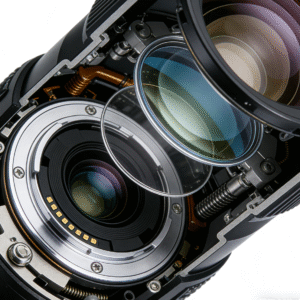 Introduction: Unveiling the Magic Behind the Glass
A camera lens is more than just a piece of glass; it’s a complex instrument of precision engineering designed to capture and shape light. For any photographer, moving beyond automatic settings requires a deeper understanding of this crucial tool. The global camera lenses market is a testament to their importance, a sector anticipated to grow from USD 6 billion in 2023 to USD 10 billion by 2032. This growth is part of a larger trend in the photography equipment market, which was valued at over USD 89 billion in 2023 and continues to expand. But what truly lies within that cylindrical housing? This breakdown will demystify every component, from the external controls you touch to the intricate optical heart within.
Why Understanding Your Lens Matters
Knowing the anatomy of your camera lens transforms you from a passive picture-taker into a conscious image-maker. Understanding how each part functions allows you to manipulate light, control sharpness, and creatively influence depth of field. It’s the difference between hoping for a good shot and knowing how to create one. This knowledge empowers you to make informed decisions when choosing your next lens and to fully exploit the creative potential of the gear you already own.
A Glimpse Inside the Optical Marvel
At its core, a lens is an optical device that gathers light from a scene and focuses it onto your camera’s digital sensor. It achieves this through a series of precisely shaped and arranged glass elements. Every ring you turn, every switch you flip, and every internal motor that whirs to life is part of a sophisticated system dedicated to one goal: rendering a sharp, clear, and compelling image.
The External Anatomy: What You See and Interact With
An overview of the key external components of a typical modern camera lens.
The exterior of a camera lens provides the primary interface for the photographer. These are the physical components you handle to frame your shot, adjust focus, and control the image’s final look.
The Lens Barrel: The Protective Outer Shell
The lens barrel is the main body and outer casing of the lens. Typically constructed from high-quality plastic or metal, its primary function is to house and protect the delicate internal lens elements and mechanical systems from dust, moisture, and impact. It provides the structural foundation upon which all other external components are mounted.
The Lens Mount: Connecting to Your Camera
The lens mount is the critical interface that physically and electronically connects the lens to the camera body. Usually made of durable metal like stainless steel or brass, it features a bayonet system for a secure, twist-on fit. This connection is not just mechanical; it includes electronic contacts that allow the lens and camera to communicate, transmitting data for autofocus, aperture control, and image stabilization. The interchangeable lens segment, which relies on these mounts, dominates the market with a revenue of 3.7 billion in 2023, underscoring the importance of this connection.
Focusing Rings: Achieving Critical Sharpness
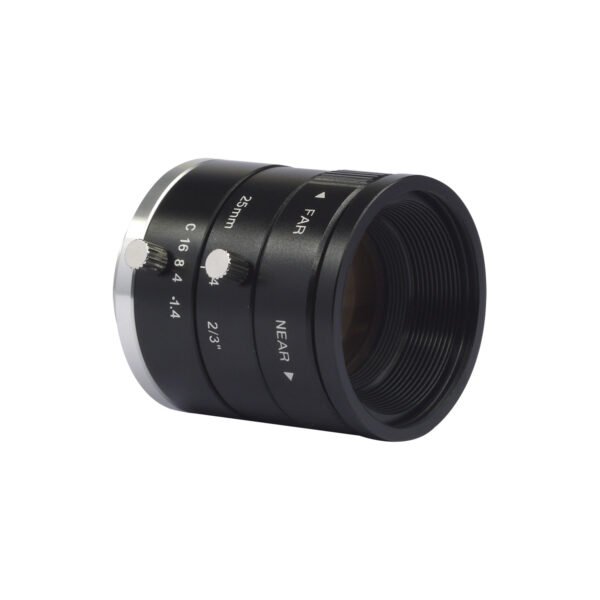
The focusing ring is a rotatable section on the lens barrel that allows for manual adjustment of the lens’s focus. Turning this ring moves specific lens elements inside, changing the distance at which subjects appear sharp. Even on autofocus lenses, this ring is crucial for fine-tuning or for situations where autofocus struggles, giving the photographer ultimate control over the point of critical sharpness.
Zoom Rings: Changing Your Perspective (for zoom lenses)
Found exclusively on zoom lenses, the zoom ring allows the photographer to change the focal length without changing their physical position. Rotating this ring shifts internal lens groups, altering the angle of view and magnification. This lets you go from a wide-angle shot to a telephoto close-up in seconds, offering immense compositional flexibility. Prime lenses, which have a fixed focal length, do not have a zoom ring.
Aperture Rings: Direct Control Over Light and Depth (where present)
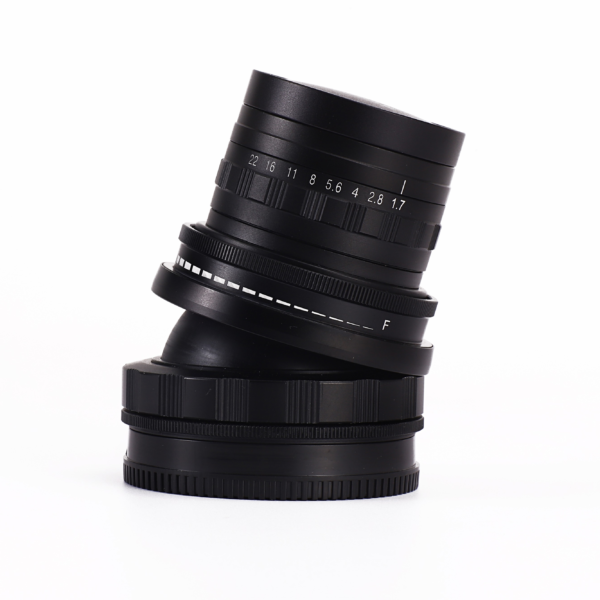
While many modern lenses control aperture electronically through the camera body, some, particularly vintage or cinema lenses, feature a dedicated aperture ring. This ring allows for direct, tactile control over the aperture diaphragm inside the lens. Marked with f-stop numbers (e.g., f/1.8, f/4, f/11), it provides a hands-on method for adjusting the amount of light entering the lens and controlling the depth of field.
Filter Threads: Expanding Creative Possibilities
Located on the very front rim of the lens, filter threads are a set of fine grooves designed to screw on accessories like filters. These filters can protect the front element (UV filters), reduce reflections (polarizers), or control exposure for long-exposure photography (neutral density filters), significantly expanding the creative capabilities of the lens.
Lens Hood Mount: Reducing Flare and Protecting the Front Element
Just outside the filter threads is the lens hood mount, typically a bayonet-style fitting. A lens hood attaches here to block stray light from hitting the front lens element, which prevents lens flare and ghosting while improving contrast. It also offers a valuable layer of physical protection against bumps and scrapes.
Switches and Displays: On-Lens Controls
Modern camera lenses often feature a variety of switches for quick control over specific functions. Common switches include AF/MF (Autofocus/Manual Focus), Image Stabilization (On/Off), and sometimes a focus limiter. Some high-end lenses may also include a small digital display showing focus distance or depth of field information.
The Optical Heart: Elements, Groups, and the Path of Light
Beneath the barrel lies the true magic of the lens: a carefully engineered collection of glass that manipulates light to form an image.
Lens Elements: The Fundamental Building Blocks
Lens elements are the individual, precisely shaped pieces of optical glass or plastic inside the lens. Each element is designed to bend (refract) light in a specific way. A simple lens might have only a few elements, while complex zoom lenses can contain 20 or more. The quality, shape, and material of these elements are paramount to the final image quality.
Lens Groups: Precision Engineering for Image Correction
To achieve a sharp image and correct for optical imperfections, individual lens elements are often cemented together into a single unit called a lens group. The arrangement and movement of these groups are what enable focusing and, in zoom lenses, changing the focal length. The design specifies how many elements and groups a lens has (e.g., “15 elements in 11 groups”).
Specialized Lens Elements: Battling Optical Imperfections
To produce the sharpest possible images, lens designers use specialized elements. Aspherical elements have complex, non-spherical surfaces that correct for various aberrations. Extra-low Dispersion (ED), Super ED, or Fluorite elements are made from special glass that reduces chromatic aberration, preventing color fringing around high-contrast edges.
Understanding Optical Aberrations: The Challenges Lenses Overcome
No lens is perfect. Optical aberrations are imperfections in the way a lens focuses light. Common types include spherical aberration (softness), chromatic aberration (color fringing), and distortion (where straight lines appear curved). The entire optical design, including the number of elements and the use of specialized glass, is a complex balancing act to minimize these aberrations.
Lens Coatings: The Invisible Enhancers of Image Quality
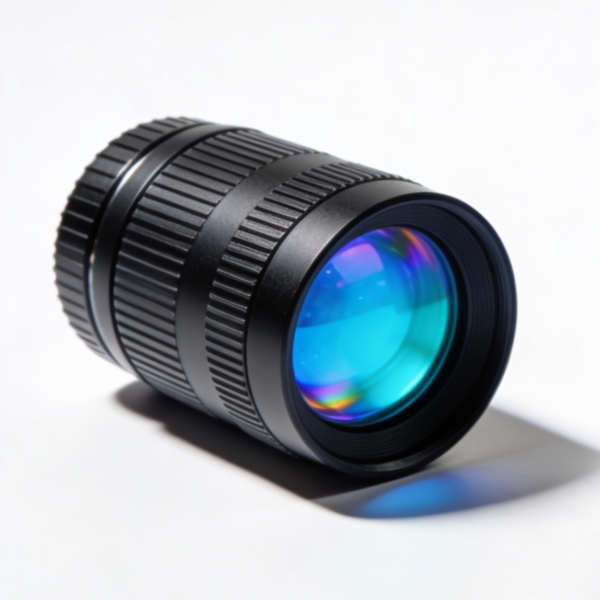
Each lens element is treated with microscopic, multi-layered coatings. These invisible layers serve a critical purpose: they reduce reflections and glare that occur as light passes through the glass. This significantly improves light transmission, boosts contrast, and ensures colors are rendered accurately, preventing the washed-out look caused by internal reflections.
The Mechanical & Electronic Systems: Precision in Motion
Beyond the static glass, modern lenses contain sophisticated systems that move with speed and precision to achieve the photographer’s vision.
The Aperture Mechanism: Controlling Light, Depth, and Bokeh
The aperture is a diaphragm made of overlapping metal blades that can open and close to form a circular opening of varying sizes. This mechanism controls how much light passes through the lens to the sensor. A wider aperture (smaller f-number) lets in more light and creates a shallow depth of field with creamy backgrounds, known as Bokeh. A smaller aperture (larger f-number) lets in less light and keeps more of the scene in focus.
Focusing Mechanisms: Achieving Pinpoint Sharpness
The focusing system moves lens groups forwards or backward to achieve sharp focus at different distances. In an autofocus (AF) system, a tiny motor—such as an Ultrasonic Motor (USM) or Stepping Motor (STM)—drives this movement based on commands from the camera. The speed and silence of this motor are key performance indicators for a modern camera lens.
Image Stabilization Systems: Counteracting Camera Shake
Many modern lenses include an image stabilization (IS) system, also known as Vibration Reduction (VR) or Optical SteadyShot (OSS). This technology uses gyroscopic sensors to detect camera movement and then shifts a specific lens group to counteract the shake. This allows a photographer to shoot at slower shutter speeds handheld without introducing motion blur.
Electronics: The Brains of the Modern Lens
A dedicated circuit board and microprocessor act as the brain of the lens. They process commands from the camera, control the aperture diaphragm, drive the autofocus motor, and manage the image stabilization system. This electronic communication is what makes modern, feature-rich camera lenses possible.
Beyond the Essentials: Specialized Lens Types and Concepts
The combination of all these parts allows for a wide variety of lens designs, each suited for different photographic tasks.
Prime vs. Zoom Lens Construction
Prime lenses have a fixed focal length, meaning they cannot zoom. Their construction is often simpler with fewer moving parts, which can lead to sharper images and wider maximum apertures. Zoom lenses contain additional, complex lens groups that move to provide a range of focal lengths, offering versatility at the cost of some size, weight, and occasionally, optical quality.
Focal Length and Image Circle
Focal length, determined by the optical design, dictates the lens’s angle of view and magnification. The image circle is the cone of light the lens projects onto the sensor. A lens must produce an image circle large enough to cover the camera’s sensor (e.g., full-frame or APS-C). For instance, in 2024, lens sales saw nearly 4.5 million full-frame lenses sold, each designed to project a large enough image circle for that sensor format.
Specialized Lens Types and Their Unique Anatomy
Different lens types have unique components. Macro lenses have focusing mechanisms that allow for extreme close-ups. Fisheye lenses use a highly convex front element to achieve an ultra-wide, distorted perspective. Tilt-shift lenses have complex mechanical assemblies that allow the lens to be physically tilted or shifted relative to the sensor to control perspective and focus plane. The ongoing innovation is evident as mirrorless cameras now outsell DSLRs by a factor of 5, driving the development of new and specialized lens designs for these systems.
The Symbiotic Relationship: How Lens Parts Work Together
A camera lens is a symphony of components working in perfect harmony. No single part operates in isolation; they are all interconnected, contributing to the final image.
From Light Capture to Image Projection
When you press the shutter button, a chain reaction occurs. Light enters through the front element, its path refined by coatings and specialized glass. The aperture diaphragm sets the brightness and depth. The focusing motor rapidly adjusts a lens group for perfect sharpness. The image stabilization system compensates for your movement. Finally, this precisely controlled beam of light is projected onto the camera sensor, creating your photograph. Each component, from the simplest ring to the most complex electronic system, plays an indispensable role in this intricate dance of light. Understanding this process is the key to mastering the art and science of photography.
Sure, here’s a draft for your marketing advertisement:
If you’re in the market for high-quality lenses, look no further. At Leedsen, we pride ourselves on precision, innovation, and unmatched customer service. Whether you’re seeking specialized lenses or collaborating on custom designs, our team is ready to assist with your needs. Choose Leedsen, where excellence in lens manufacturing meets your vision. Contact us today to learn more about our products and services!
Frequently Asked Questions About Camera Lenses
1. What are the main parts of a camera lens?
- A camera lens consists of several key components: the front element, aperture diaphragm, focusing elements, image stabilization system, lens mount, focusing rings, and electronic contacts.
2. What does the front element of a camera lens do?
- The front element is the lens’s first point of contact with light. It plays a crucial role in capturing and directing the light through the lens system, responsible for minimizing distortions and ensuring optimal image quality.
3. How does the aperture diaphragm affect a photo?
- The aperture diaphragm controls the amount of light entering the lens and hitting the camera sensor. It affects exposure, depth of field, and the sharpness of an image. A wider aperture (small f-number) allows more light in and creates a shallow depth of field, while a narrow aperture (large f-number) results in a deeper focus.
4. What is the purpose of the focusing elements in a camera lens?
- Focusing elements adjust the position of lens groups to ensure the subject is sharp and in focus. Whether through manual rings or autofocus motors, these elements are critical for achieving the desired sharpness.
5. Why is image stabilization important in a lens?
- Image stabilization reduces the blur caused by camera movement during exposure. It is particularly beneficial in low-light conditions or when shooting hand-held at slower shutter speeds.
6. How do electronic contacts in a camera lens work?
- Electronic contacts facilitate communication between the lens and the camera body. They transmit data such as aperture settings, focus information, and image stabilization status, allowing the camera to effectively control the lens.
7. Can I use the same lens on different camera brands?
- Not all lenses are interchangeable across different camera brands due to variations in lens mounts and electronic systems. Using lens adapters can sometimes bridge this compatibility gap, but with potential limitations in functionality.
8. What is the significance of lens coatings?
- Lens coatings reduce reflections, glare, and lens flare while enhancing contrast and color fidelity. These coatings are applied to lens elements to improve image quality, especially in challenging lighting situations.
9. Do all lenses have image stabilization?
- Not all lenses come equipped with image stabilization. It’s a feature more commonly found in telephoto or zoom lenses, but many prime lenses lack this capability, relying on the camera body for stabilization.
10. How often should I clean my camera lens, and what’s the best way to do it?
- Cleaning your camera lens depends on usage frequency and environmental conditions. Generally, clean it whenever you notice dirt or smudges affecting your photos. Use a lens blower, a soft brush, and specially designed lens cleaning cloth and solution to avoid scratching the lens elements.
Understanding these components and their functions can significantly enhance your photography skills, allowing you to make informed choices when selecting and using camera lenses.