

Introduction: What is an FA Lens?
What this section solves: Defines the industrial-grade FA lens and its core role in machine vision systems.
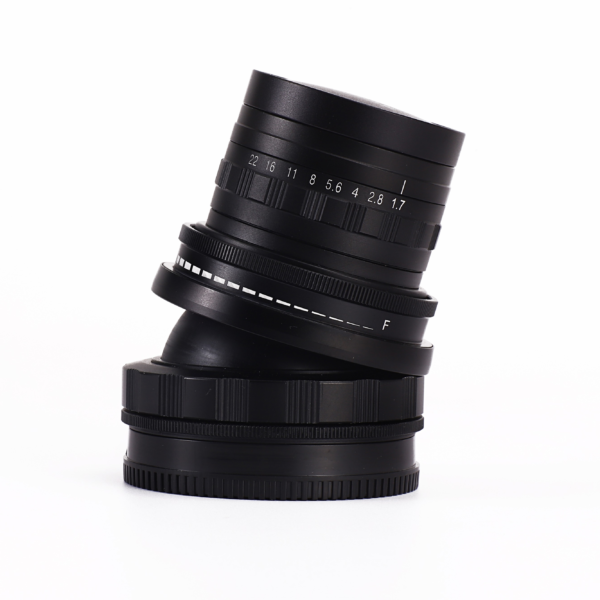
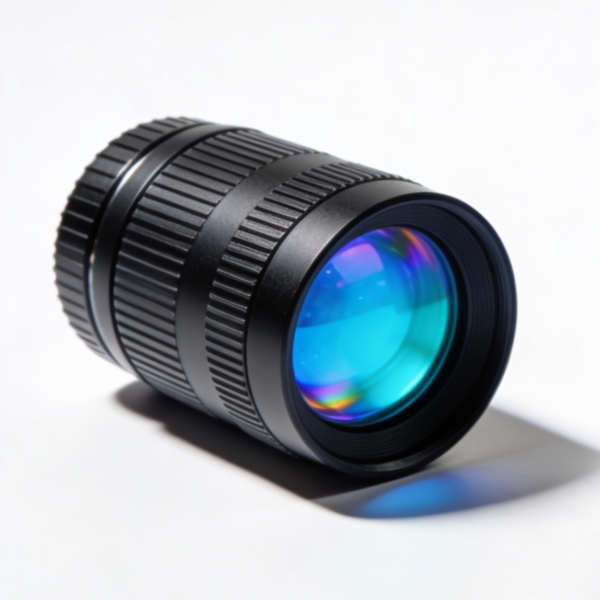
An FA lens, short for Factory Automation Lens, is a specialized optical component designed exclusively for machine vision systems, automated inspection equipment, and high-precision measurement instruments. Unlike consumer photography lenses, which are designed to capture aesthetically pleasing images for the human eye, the primary goal of an industrial lens is to deliver precise, stable, and repeatable image data directly to machine vision algorithms.
Based on 10 years of hands-on experience deploying vision systems across hundreds of automated machines, we can confidently state that the reliability of a vision system is heavily restricted by the optical lens’s vibration resistance and distortion control. Through purely mechanical locking structures and lens groups optimized for close-range imaging, FA lenses ensure that equipment running at high speeds 24/7 consistently outputs high-resolution images without edge deformation.
Why Automation Equipment Must Replace Standard Lenses with Professional FA Lenses
What this section solves: Analyzes why consumer or security lenses fail to meet the stability and precision demands in harsh factory environments.
During the early stages of equipment R&D, some engineers attempt to use standard DSLR lenses or CCTV security lenses to cut costs. However, automated factory floors are filled with continuous high-frequency vibrations, temperature fluctuations, and dust. The aperture and focus rings of standard lenses easily shift under vibration, causing the equipment to lose focus or the image to darken after a few months of operation, directly leading to high false-reject rates.
In contrast, professional machine vision lenses like the Leedsen 2/3” 2MP 25mm large aperture FA lens feature full-metal housings (weighing only 83g) and are equipped with dedicated mechanical locking screws. These firmly secure both the focus (NEAR/FAR) and aperture rings. To clearly illustrate the differences, please refer to the comparison table below:
| Comparison Metric | Professional FA Lens (e.g., Leedsen 25mm) | Standard Consumer/CCTV Lens | Impact on Automation Equipment |
|---|---|---|---|
| Optical Distortion | Extremely low (e.g., as low as 0.04% on a 1/3″ sensor). | High (edges usually show noticeable barrel or pincushion distortion). | Dictates the absolute accuracy of dimensional measurement and positioning. |
| Vibration & Locking | Manual focus/aperture rings with pure mechanical locking screws. | Contains electronic motors or lacks locking mechanisms entirely. | Affects focal length and light intake stability during high-speed operation. |
| Environmental Tolerance | -10°C to +50°C, all-metal structure resists wear. | Contains many plastic parts, highly susceptible to thermal expansion. | Determines the maintenance-free lifecycle of the equipment in harsh workshops. |
Core Parameter Breakdown (Based on the Leedsen 2/3'' 2MP 25mm Large Aperture FA Lens)
What this section solves: Teaches engineers how to extract valuable optical data from specifications to benefit automation equipment.
Understanding industrial lens specifications is a fundamental skill for vision engineers. Using the tested data of the Leedsen 2/3” 2MP 25mm large aperture FA lens as a benchmark, we can break down the following core metrics:
- Sensor Size and Mount: This lens supports a maximum sensor size of 2/3″ (11mm) and uses a standard C-Mount interface. During system integration, you can seamlessly pair it with mainstream C-Mount industrial cameras. As long as the camera sensor is 2/3″ or smaller, no vignetting (dark corners) will appear on the image edges.
- Focal Length and Aperture: The 25mm fixed focal length is a widely used medium-telephoto standard. Its large F1.4 aperture guarantees massive light intake, allowing the equipment to use ultra-short exposure times to freeze high-speed moving objects without motion blur.
- Distortion: This is the soul of an FA lens. According to test data, when paired with a 2/3″ sensor (at y=5.5mm), the distortion of this Leedsen lens is a mere 0.27%. If paired with a 1/3″ sensor, it drops to an incredible 0.04%. This optical performance drastically reduces the computational burden required for software-side image calibration.
- Dynamic Depth of Field (DOF): The depth of field of a lens is never static; it changes dynamically based on the working distance. For instance, at a focusing distance of 300mm, the front DOF is 2.27mm and the rear DOF is 2.03mm. When the working distance extends to 500mm, the front and rear DOF expand to 6.28mm and 6.44mm, respectively.
Real-World Case Studies: 3 Typical Applications of FA Lenses in Automation
What this section solves: Demonstrates how FA lens parameters solve actual engineering pain points in specific equipment development scenarios.
Case 1: High-Precision CNC Machined Parts Dimensional Measurement
In post-CNC precision machining inspection, our client’s main pain point was the frequent out-of-tolerance misjudgment of micro-component edge dimensions. We introduced the Leedsen 25mm FA lens. Leveraging its ultra-low 0.27% distortion, the system captured the edges of the components perfectly straight and true to life. This proves that in precision measurement, opting for low-distortion customized lens solutions is the key to improving equipment yield rates.
Case 2: PCB Defect Inspection (AOI) in High-Speed SMT Machines
In high-speed Automated Optical Inspection (AOI) equipment, the camera probe moves with extreme acceleration and stops instantly to take a picture. The client previously faced image blurring and aperture shifting caused by machine vibration. We replaced their setup with this FA lens featuring mechanical locking screws. By utilizing the large F1.4 aperture, we compressed the camera exposure time to sub-milliseconds, completely eliminating optical instability caused by mechanical shocks.
Case 3: Robotic Arm Vision-Guided Grabbing (Pick & Place)
When installing an “Eye-in-hand” vision system on a robotic arm, the arm’s effective payload is highly restrictive. The Leedsen FA lens weighs only 83g with compact dimensions of 34×35.6mm. Without consuming excessive space or payload capacity, its manually adjustable focus range (from 0.25m to infinity) perfectly adapted to the varying picking heights required by the robotic arm.
Mechanical Engineer's Selection Guide: How to Choose the Right FA Lens
What this section solves: Provides a standardized lens selection logic to reduce trial-and-error costs and hardware incompatibility risks during early R&D.
When designing automation equipment, deciding which lens to purchase and what focal length to use ultimately depends on the actual Working Distance (WD) available inside your machine and the required Field of View (FOV). Follow this step-by-step logic to determine the right fit:
- Define Spatial Constraints: Use a tape measure or 3D CAD model to measure the vertical distance from the camera mounting plate to the surface of the object being inspected. This establishes your maximum Working Distance (WD).
- Confirm the Camera Sensor Size: Check your chosen camera’s sensor size (e.g., 1/2″ or 2/3″). Ensure that the FA lens’s maximum compatible format is equal to or larger than the camera’s sensor.
- Calculate the Focal Length: Based on the object’s length/width (FOV) and the WD, use the camera’s sensor size to reverse-calculate the required focal length. You can refer to our detailed <a href=”#”>machine vision lens selection guide</a> for exact calculation formulas.
- Evaluate Mechanical Compatibility: Check the front of the lens for filter threads. For example, the Leedsen 25mm lens features an M30.5×0.5mm thread, making it easy to attach polarizing or bandpass filters to eliminate industrial glare.
A Common Pitfall We See in Projects:
A frequent and costly mistake during hardware selection is ignoring sensor size compatibility to save budget. Engineers sometimes pair a large 2/3″ industrial camera with a smaller 1/2″ FA lens. Because the lens cannot project an image circle large enough to cover the sensor, it results in severe mechanical vignetting (blacked-out corners). This immediately causes edge-detection algorithms to fail, forcing a complete redesign of the vision station. Always ensure the lens format $\ge$ camera format.
Frequently Asked Questions (FAQ)
What this section solves: Answers the top 5 common questions purchasing and R&D engineers have about machine vision lenses.
Q1: What does “C-Mount” mean in the FA lens parameter sheet?
A1: C-Mount is one of the most universal threaded interface standards for industrial cameras and lenses. It has a flange focal distance (the distance from the lens mount to the sensor) of 17.526mm. If your camera is also a C-Mount, the two can be screwed together directly without any adapter rings.
Q2: How does the “Distortion” of a lens actually affect automation equipment?
A2: Distortion refers to the degree of geometric deformation at the edges of an image. In high-precision measurement machines, high distortion will cause a 10mm component at the edge of the frame to be calculated as 10.2mm, leading directly to a false reject. Professional FA lenses use specialized glass elements to keep this near zero.
Q3: Will temperature changes in a factory environment damage an FA lens?
A3: Professional FA lenses are built specifically for industrial environments. The Leedsen 2/3” 2MP 25mm FA lens, for instance, has an operating temperature range of -10°C to +50°C. This easily covers the vast majority of non-air-conditioned stamping or machining workshops.
Q4: Why do FA lenses have two adjustment rings, and why do both have locking screws?
A4: The two rings independently control the focus (sharpness) and the aperture (light intake and depth of field). The independent locking screws exist so that before the equipment leaves the factory, the optimal optical state can be physically locked down. This prevents settings from shifting during long-distance shipping or due to machine vibrations on the factory floor.
Q5: The parameter sheet lists different FOVs for various sensor sizes (2/3″, 1/2″, 1/3″). Which one should I look at?
A5: This entirely depends on the sensor size of the industrial camera you are pairing it with. If your camera has a 1/2″ sensor, you only need to reference the data row corresponding to 1/2″ (e.g., a horizontal FOV of 14.6°). The smaller the sensor, the narrower the angle of view you will capture at the exact same distance.